
Edition: 2026 / Official
Category: Combat Robot 500 g
Status: High-Risk Technical Sport Category
Governing documents: Robotics Championship Terms & Conditions (T&C) + Addendum 9.6
0.1 Scope
These regulations apply exclusively to the competition category “Combat Robot 500 g” as defined in T&C Article 1.2.7 and Addendum 9.6.
0.2 Hierarchy of Rules
If a conflict exists between this document and the Robotics Championship T&C, the following hierarchy applies:
T&C + Addendum 9.6 (highest priority)
These Combat Robot 500 g Regulations
Category briefings / referee announcements made before the match (lowest priority, but binding for that match)
0.3 Authority
The Head Referee and Organizers hold final authority over safety decisions, match stoppage, disqualifications, and category cancellation, per T&C Article 5, T&C Article 8, and Addendum 9.6.5.
1.1 High-Risk Technical Sport
Combat Robot 500 g is classified as a high-risk technical sport category involving kinetic weapons, high-current electrical systems, and battery/fire risk. (See Addendum 9.6.1)
1.2 Age Restriction – 18+
Participation is strictly limited to persons aged 18 years or older. (T&C Article 1.2.7; Addendum 9.6.2)
Minors are not permitted in Combat Robot areas (arena, pits, staging, homologation zone), regardless of spectator status, unless explicitly authorized by Organizers for controlled media/official reasons.
1.3 Team Structure
A team may consist of up to 5 members, per T&C 1.5 (unless restricted by event logistics).
For each match, only:
1 Operator (primary controller)
1 Assistant (optional)
may be allowed in the Combat Robot operational zone.
1.4 Legal Responsibility
By registering and competing, each team accepts full responsibility for robot safety and any incident caused by their robot, weapons, batteries, or equipment, per T&C Article 6, T&C Article 8, and Addendum 9.6.4.
2.1 Maximum Weight
Robot mass at the start of each match must be ≤ 500.0 g, including battery, weapon, fasteners, and any attached decorations.
2.2 Maximum Size (Static)
Robot must fit within a 150 mm × 150 mm square footprint at the start of the match.
Height is not restricted, but the robot must fit safely within the arena and pass safety inspection.
Controlled expansion after the start is allowed only if the robot remains a single unit (see 2.5).
2.3 Mobility Requirement
Robots must have controlled, observable mobility.
A robot that cannot demonstrate controlled translational movement may be counted out (KO/TKO rules).
2.4 Prohibited Robot Types
Flying (sustained powered flight) is prohibited.
Cluster bots / multibots (separating into multiple independently active pieces) are prohibited unless explicitly announced as allowed for this edition (default: not allowed).
2.5 Single Unit Rule
Robots must remain a single centralized unit during the match.
Detached fragments are allowed as battle damage. Intentionally deploying separate active units is prohibited.
3.1 Teleoperation Only
Robots must be remotely controlled. Full autonomy is prohibited.
3.2 Allowed Frequencies
Only 2.4 GHz radio control systems are permitted.
3.3 Failsafe Requirement (Mandatory)
All robots must have a failsafe such that on signal loss:
drive power is cut and
weapon power is cut or rendered safe
within 1 second.
3.4 No Homemade Radio Systems
Homemade radios, non-certified transmitters, or non-standard control systems are prohibited unless explicitly approved in writing before the event.
4.1 Allowed Battery Types
Permitted: LiPo, Li-ion, NiMH, and other sealed battery systems that do not spill liquids when damaged.
4.2 Battery Safety Requirements
Batteries must be mechanically secured.
Battery terminals must be protected against short-circuit.
Battery must be protected from direct weapon contact where reasonably possible (guards, covers).
4.3 Main Power Isolation (Mandatory)
Each robot must have a manual main power disconnect accessible from outside or accessible immediately upon opening the robot (e.g., removable link, switch).
Robot must be capable of being made fully safe within 60 seconds.
4.4 Indicator Light (Recommended / Optional by event)
A visible indicator that main power is connected is recommended and may be required by event briefing.
5.1 Allowed Weapons (Examples)
Spinning weapons (bars, discs, drums)
Flippers / lifters
Hammers / axes
Wedges / plows
Saws / cutters (subject to safety approval)
5.2 Prohibited Weapons and Tactics (Core)
The following are strictly prohibited:
A) Entanglement devices (forbidden – NHRL style)
nets, ropes, fishing line, tape, chains intended to entangle, cords, Velcro traps, adhesives used to trap opponents, or any device designed primarily to immobilize through entanglement.
B) Projectiles
Any weapon that fires or launches objects (bullets, darts, pellets, springs-as-projectile) is prohibited.
C) Liquids, powders, gasses, foams
Any liquid weapon
powders/sand/ball bearings
expanding foams
any substance that requires cleaning or risks inhalation/contamination.
D) Fire / heat / explosions
Flame weapons, pyrotechnics, explosives, and intentionally heated weapons are prohibited.
E) Electrical shock / tasers
Any electrical weapon intended to shock or disable electronics is prohibited.
F) RF jamming / interference
Any deliberate interference with opponent radio systems is prohibited.
5.3 Kinetic Energy Containment and Safety
Spinning weapons must be built to minimize fragmentation risk (retention hardware, locking fasteners, material selection).
The Head Referee may require weapon guards for staging/transport and may prohibit any weapon deemed unsafe.
6.1 Approved Polycarbonate Arena (Mandatory)
All combat matches must occur inside an approved safety arena designed to contain:
weapon fragments
high-speed impacts
debris and dust
fire risk to the extent possible
(See Addendum 9.6.6 of T&C)
6.2 No Power Outside Arena (Strict)
No Combat Robot may be powered, armed, or weapon-tested outside the arena or an officially designated test box, unless explicitly authorized by referees.
6.3 Combat Robot Zones
The venue must designate:
Pits / work area (no weapon spinning)
Homologation / inspection zone
Staging / waiting area near arena
Arena operational area (PPE mandatory)
Organizers may restrict spectator access to these zones.
7.1 Mandatory PPE in Combat Zones
All operators, assistants, referees, and staff inside Combat Robot zones must wear:
Approved protective eyewear
Protective gloves
Additional PPE may be required (hearing protection, face shield) depending on arena and weapon types.
7.2 Non-compliance
Failure to comply results in immediate disqualification from the current match and may result in event removal, per Addendum 9.6.7 and T&C conduct rules.
8.1 Initial Check-In (Administrative)
Teams receive a robot ID/number and confirm operator identity.
8.2 Technical Homologation (Mandatory)
Robots must pass homologation before competing, including:
weight check (≤ 500 g)
size check (≤ 150×150 mm)
failsafe verification
power isolation check
weapon safety verification
battery securement check
general safety and construction review
8.3 Pre-Match Staging Rules
Teams called for the next match must report to staging with robot unarmed and safe (weapon lock installed if applicable).
Once staged, no design changes are allowed before the match. Only emergency repairs may be allowed at Head Referee discretion, provided they do not create a safety risk or change the robot configuration unfairly.
8.4 Second Inspection (Before Match)
At the discretion of referees, robots may be re-weighed and re-checked for safety before entering the arena.
9.1 Arming Sequence (Inside Arena Only)
Standard safe arming sequence:
Robot placed in arena with weapon pointed inward
Weapon guards removed (if any)
Transmitter ON
Robot main power connected
Weapon lock/pin removed (if used)
Arena closed
Referee verifies readiness
Match starts on referee signal
9.2 No Movement While Arena Open
No driving or weapon tests are permitted while the arena is open.
9.3 Disarming Sequence (After Match End)
Weapon disabled
Robot oriented inward
Arena opened
Main power disconnected
Transmitter OFF
Weapon lock/pin installed
Robot removed
10.1 Match Duration
Standard match duration: 2:00 minutes (may be adjusted by organizers before the event)
10.2 Start Signal
Referee starts match with an audio/visual signal. Robots may move only after the start signal.
10.3 Pinning / Holding Limits
Pinning, holding, or lifting an opponent is allowed for up to 10 seconds.
Referee will call release. Failure to release may result in separation and penalties.
10.4 Separations
Referees may pause and separate robots if:
both robots are stuck together
pin limit is exceeded
safety requires it
After separation, match resumes immediately.
11.1 Definition of Controlled Movement
Controlled movement means the robot can demonstrate intentional translational motion (not only weapon spinning, not only twitching).
11.2 KO (Count-Out)
If a robot cannot demonstrate controlled movement, referee begins a 10-second count-out.
If movement is not shown by count end → robot is KO’d and loses the match.
11.3 TKO (Safety / Catastrophic)
Referee may declare an immediate TKO if:
battery is exposed and unsafe
robot is on fire / smoking heavily
weapon is dangerously unstable
arena integrity is compromised
Safety decisions override match outcome and are final.
11.4 Simultaneous Incapacitation
If both robots appear incapacitated:
Referee may reposition both to original orientation and request movement test.
If only one moves → that robot wins.
If neither moves → judges decide.
If no KO/TKO occurs by match end, winner is decided by judges using:
A) Damage – 5 points
Visible functional damage: drive loss, weapon loss, structural failure
Significant impairment outweighs cosmetic marks
B) Aggression – 3 points
Frequency of attacks
Initiating engagement rather than evasion
Weapon use to pressure opponent
C) Control – 2 points
Driving skill, positioning
Using arena space effectively
Avoiding hazards while maintaining offense
Damage is weighted highest to reward effective weapons and real combat.
Pure pushing without engagement scores low aggression.
Running away scores low aggression/control.
Judges must not consider behavior “attitude” as a scoring factor. Conduct issues are handled only under penalties and conduct rules.
13.1 Between Matches
Repairs and battery changes are allowed between matches.
13.2 During a Match
No repairs, no battery swaps during a match.
13.3 In Staging
No design changes in staging. Only minimal safety fixes at Head Referee discretion.
14.1 Safety Violations (Immediate DQ likely)
powering robot outside authorized area
weapon spinning outside arena/test box
failsafe not working
refusal to follow referee safety instructions
missing PPE in combat zones
14.2 Match Conduct Violations
false start
repeated pin-limit violations
deliberate interference with referees
intentional arena damage beyond normal combat
14.3 Prohibited Weapon Violation
Any use of prohibited weapons/tactics (including entanglement) results in:
immediate match loss and likely event disqualification, depending on severity.
14.4 Cumulative Misconduct
Applies per T&C Chapter 7 (accumulation and disqualification thresholds).
15.1 No Objections to Referee Safety Decisions
Safety decisions are final.
15.2 Objections During Match Only
A team may raise an objection to the Head Referee before the match ends (if safe).
Once match is completed and robots are removed, objections may be rejected.
16.1 Fire
Referee stops match immediately.
Operators disable weapons if possible.
Organizers follow fire suppression protocol.
Robots may be left to burn down if necessary for safety.
16.2 Runaway Robot
Operators must turn off transmitter to trigger failsafe.
If failsafe fails, robot must remain contained until safe.
16.3 Arena Damage
If arena integrity is compromised, match is stopped and category may be paused or canceled.
By entering a robot in Combat Robot 500 g, each participant confirms acceptance of:
This regulation
Robotics Championship Terms & Conditions
Addendum 9.6
All safety inspections and decisions of Organizers and Head Referee.
Appendix A: PPE specification (what eyewear qualifies, what gloves qualify)
Appendix B: Homologation checklist (printable)
Appendix C: Arming/disarming poster (1-page)
Appendix D: Damage/Aggression/Control scoring examples (judge training sheet)
This appendix applies to all persons entering any Combat Robot Area, including:
Operators
Assistants
Referees
Inspectors
Organizers
Technical staff
The following protective equipment is mandatory:
|
Item |
Requirement |
|
Protective eyewear |
Must provide frontal and lateral impact protection against flying debris and fragments. Must be transparent and allow full vision. Safety glasses or goggles rated for industrial or laboratory use are acceptable. |
|
Protective gloves |
Must protect against mechanical shock, cuts, heat, and battery handling. Cut-resistant or work gloves are recommended. |
|
Closed footwear |
Shoes must fully cover the foot. Sandals, flip-flops, or open shoes are prohibited. |
The following do not qualify as protective equipment:
Sunglasses
Fashion glasses
Latex medical gloves
Thin textile gloves
Cycling gloves
Fingerless gloves
Any person entering a Combat Robot Area without proper PPE will be:
Immediately removed from the area
Their team may be disqualified if this occurs during a match
Repeated violations may result in event removal
This rule is enforced under Addendum 9.6.7 and T&C 9.4 (Code of Conduct & Exclusion Policy).
Each Combat Robot must pass technical homologation before it is allowed to compete.
Robot number visibly attached
Operator identity verified
Team registered for Combat Robot 500 g
Total weight ≤ 500 g
Footprint ≤ 150 mm × 150 mm
Robot is a single unit
No prohibited materials or weapons
No entanglement devices
Battery type approved
Battery securely mounted
No exposed battery terminals
Main power disconnect present
Robot can be fully disabled within 60 seconds
Radio system is 2.4 GHz
Failsafe verified (robot stops when transmitter off)
Weapon securely mounted
Weapon cannot spin when failsafe is active
Weapon lock or pin present (if applicable)
No projectile capability
No entanglement systems
Head Referee / Inspector signs approval
Robot cleared to enter staging area
Robots that fail homologation may not compete until all safety and compliance issues are resolved.
This procedure must be displayed near the arena.
Robot placed in arena (weapon facing inward)
Weapon guards removed (if applicable)
Transmitter ON
Robot main power connected
Weapon lock / pin removed
Arena closed
Referee confirms readiness
Start signal → Match begins
No movement is allowed while the arena is open.
Weapon power disabled
Robot driven to face inward
Arena opened
Robot main power disconnected
Transmitter OFF
Weapon lock / pin installed
Robot removed from arena
Any deviation from this procedure is a safety violation.
Used when no KO or TKO occurs.
Judges look for:
Loss of drive (wheel, motor, gearbox failure)
Loss of weapon functionality
Bent, broken, or detached armor
Exposed battery or electronics
Cosmetic scratches do not count as meaningful damage.
Judges look for:
Who initiated contact
Who kept attacking
Who used their weapon actively
Who forced engagement
Backing away, running, or stalling scores poorly.
Judges look for:
Driving skill
Positioning
Use of arena space
Avoiding hazards while attacking
Spinning in circles, crashing into walls, or losing orientation reduces control score.
If Robot A rips off Robot B’s wheel but Robot B keeps pushing:
|
Category |
Winner |
|
Damage |
Robot A |
|
Aggression |
Robot A |
|
Control |
Possibly Robot B |
Robot A likely wins because damage is weighted highest.
Under Addendum 9.6.5 and T&C Articles 5, 6, and 8:
The Head Referee and Organizers may at any time:
Reject a robot
Require design changes
Stop a match
Cancel a category
Disqualify a team
if safety is at risk.
These decisions are final and override all competition rules.
Section 1. Game Overview
Stars twinkle in their respective constellations, while planets move through the cosmos along established orbits. As humanity embarks on interstellar travel and explores the vast universe, we will investigate the nature and laws of time and space through more precise observations and experiments. This journey will create a new legend and help us better understand the universe's evolution and development.
This competition requires young students to use their self-made robots to write and debug programs and perform competition tasks at the competition site. The theme of this competition is "Interstellar Legend." The contestants will use robots to explore the mysteries of the universe in a simulated environment, thereby popularizing scientific knowledge and training and improving the contestants' thinking, reaction, hands-on coordination, and team spirit.
Section 2. Requirements for the Team
The teams for the competition are divided into four categories:
Each team consists of a contestant and a coach. Contestants must still be registered students until June 2025.
Section 3. Robot
3.1 Requirements for Building Equipment
The event requires contestants to design and build robots to complete the corresponding tasks, but there is no need to build them on-site. Only electronic parts with plastic shells and plastic building blocks can be used to build robots. 3D-printed parts cannot be used. During the competition, the robots must not damage the competition field and task models.
Except for the motor, battery box, sensor, remote controller, and camera, all parts of the equipment prepared by the contestants shall not be assembled by screws or welding, and auxiliary materials such as glue and tape are not allowed. By registering for the competition, it is deemed that the organizing committee has the final right of interpretation of these rules.
3.2 Requirements for Designing Robots
|
Item |
Requirements |
|
Quantity |
1 robot per team. |
|
Specification of the robot |
In the Starship Dock, the robot’s size must not exceed a length and a height of 25cm × 25cm, and must not exceed a width of 25cm, but can be extended after leaving this area. |
|
Controller |
Only one controller is allowed per robot. The controller's input and output ports must be connected to the cable with RJ11 connectors (the same applies to the motor control port). Except for the primary school (junior) group, the controllers of other groups must have a built-in 2.4-inch color LCD touchscreen. |
|
Sensor |
The type and number of sensors allowed to be used by the robot are unlimited. |
|
Remote controller |
The primary school (junior) group can choose to use wireless remote control (2.4G or Bluetooth only) to complete the competition tasks, while the other groups must complete them through automatic control of the program. |
|
Motor |
The total number of motors (including servos) shall not exceed 6, and a single motor can only drive a single grounded wheel. The motors shall not be modified or over-pressurized. (For fairness, the motors used to drive the grounded wheels are limited to 3582, 3581, 3579, 3570, and 9523 models.) |
|
Driving wheels |
The diameter of the robot's wheels (including tires) used for landing shall not exceed 70mm, and the width shall not exceed 25mm. |
|
Structure |
When building a robot, you must use standard 10 mm plastic building blocks with design dimensions. You may not use 3D-printed parts or auxiliary connecting materials such as screws, bolts, rivets, glue, tape, etc. |
|
Battery |
The rated input voltage of robots in the primary school (junior) group shall not exceed 6V, and the rated input voltage of robots in the primary school (senior) group, junior high school group, and high school group shall not exceed 9V. Robots are not allowed to have boost circuits. |
|
Roll call and check |
Contestants will be allowed to bring the complete robot to the roll call of the first-round game. However, the robot must pass a comprehensive inspection to comply with relevant regulations. Contestants should adjust the robot's non-compliance before participating in the competition. |
Section 4. Game Procedure
4.1 Entry Order
The Super AI Super Track competition is a points competition. The participating teams draw lots on the spot to determine the grouping and order of competition and take turns playing in the order determined by the draw.
The organizing committee will ensure that every participating team in the same group has the same chance to play, generally not less than two rounds.
When the previous team starts the game, the next team will be notified to wait and prepare.
Teams that do not arrive within the stipulated time will be deemed to have given up the qualification for the competition.
4.2 Programming and Debugging
The participating teams will have at least 60 minutes to debug their robots before the first round. The referee team will adjust the duration of the debugging according to the actual situation and announce it to all participating teams before each round of debugging.
Contestants are required to program and debug in an orderly manner. Contestants who do not comply with the order may be disqualified. Once programming and debugging are complete, all teams must place their robots in a location designated by the referee and keep them there. Contestants are not allowed to touch robots again without permission, otherwise, they will be disqualified.
After the referee signals the start of the game, the team that is still not ready will lose the opportunity to play in this round, but it will not affect the next round.
4.3 Preparations before the Game
When preparing to go on stage, the contestants take their robots and enter the competition area under the guidance of the referee or staff. Teams that fail to arrive within the specified time will be deemed to have forfeited.
When entering the field, contestants should stand near the Starship Dock and put their robots into the Starship Dock. At this time, any part of the robot and its projection on the ground cannot exceed the Starship Dock.
4.4 Start the Game
After the referee confirms that the team is ready, he will issue a countdown start command of "3, 2, 1, start". As the countdown begins, the contestants can slowly approach the robot with their hands. When the contestants hear the "start" command, they can touch a physical button on the controller to start the robot.
Starting a robot before the "Start" command will be considered a "false start" and will result in a warning or penalty. Once a robot is started, players are not allowed to touch the robot (except for reset).
After starting, the robot must not separate parts or drop mechanical parts on the field. The referee will clear the robot parts that accidentally fall off the field at any time. Separating parts for strategic needs is a foul. If the robot completely crosses the field’s boundary due to excessive speed or program error after starting, or throws the items it carries out of the field, the robot and the items shall not return to the field.
4.5 Time Score
If you complete all the basic tasks and random tasks set by each group within the specified time, you can get a "time score". The completion of additional tasks does not affect the "time score". After the game, the players should immediately signal the referee to stop the timing. The remaining time will be calculated according to the interval described below. (Note: The integer part of the remaining time is taken for calculation, 2 seconds for 2.7 seconds, and 10 seconds for 10.3 seconds.)
(1) If the remaining time is less than 3 seconds, the time score is 0;
(2) If the remaining time is 3 seconds ≤ remaining time < 10 seconds, 5 points are added;
(3) If the remaining time is 10 seconds ≤ remaining time < 20 seconds, 10 points are added;
(4) If the remaining time is 20 seconds ≤ remaining time < 30 seconds, 20 points are added;
(5) If the remaining time is ≥ 30 seconds, 30 points are added.
4.6 Reset
To encourage participating teams to improve program stability and optimize competition strategies, a "smoothness score" is set. 50 points of "smoothness score" are automatically obtained when the competition starts. Every time a reset occurs during the entire mission, the "smoothness score" is reduced by 5 points, with a maximum reduction of 50 points.
Each time a reset occurs, the points obtained are reset to zero, the mission model needs to be restored to the initial state, and the robot returns to the Starship Dock and starts again. When a reset occurs, the timing does not stop.
The robot needs to be reset to the Starship Dock in the following situations:
(1) The contestant requests a reset from the referee;
(2) The robot leaves the competition venue;
(3) The contestant touches the mission model or robot without permission;
(4) In an Advanced Mission, the robot does not move along the flight path or the robot leaves the track line.
4.7 End of Game
If the following situations occur, the competition will end upon the referee's whistle and the time will be recorded.
(1) The robot is unable to continue to perform subsequent tasks;
(2) The team completes the "safe return" task;
(3) The team actively signals the referee to end the competition;
(4) The task time limit is reached.
4.8 Final Score
After each game, the team's single-round score is calculated. The total score of the task is scored according to the task completion standard, see the Descriptions of Elementary Missions or Advanced Missions for details. After all rounds of competition are completed, the highest score of each single game is used as the final competition score of the team.
The time score is the number of seconds remaining at the end of the round, refer to the requirements of "Section 4.5 Time Score".
Single-round score = the score for completed tasks + smoothness score + time score.
4.9 Ranking
After all the games in a certain group are over, all teams will be ranked according to their total score. If two teams have the same score, they will be ranked again according to the following criteria:
(1) The team with the higher total score in the two rounds will be ranked higher.
(2) The team with the shorter completed time in the two rounds will be ranked higher.
(3) The team with the fewer reset times will be ranked higher.
(4) The team with the fewer motors and sensors used by the robot will be ranked higher.
Section 5. Descriptions of Elementary Missions
The following description of Elementary Missions only applies to the Primary School (Junior) Group. Teams control the robot to complete tasks by program control or remote control. The robot can arrange the order of completing the tasks by itself. After completing the task, all robots of the team must return to the designated area to end the game.
The competition consists of an automatic period and a remote-control period, totaling 120 seconds, of which the automatic period takes up to 10 seconds and the remote-control period takes up to 110 seconds. During the automatic period, the robot must complete the tasks set in the field through program control; during the remote-control period, the contestants can operate the robot through the remote controller to complete the tasks set in the field. The remote-control period can only start after the automatic period ends.
For the task models, please refer to the diagrams below the task description. Note that the actual task models in the competition may differ. For example, the beams, connector pegs, and other structures may come in different colors or vary slightly in size and height. Contestants should be capable of making adjustments based on the actual conditions.
5.1 Competition Field for the Elementary Missions
5.1.1 Competition field
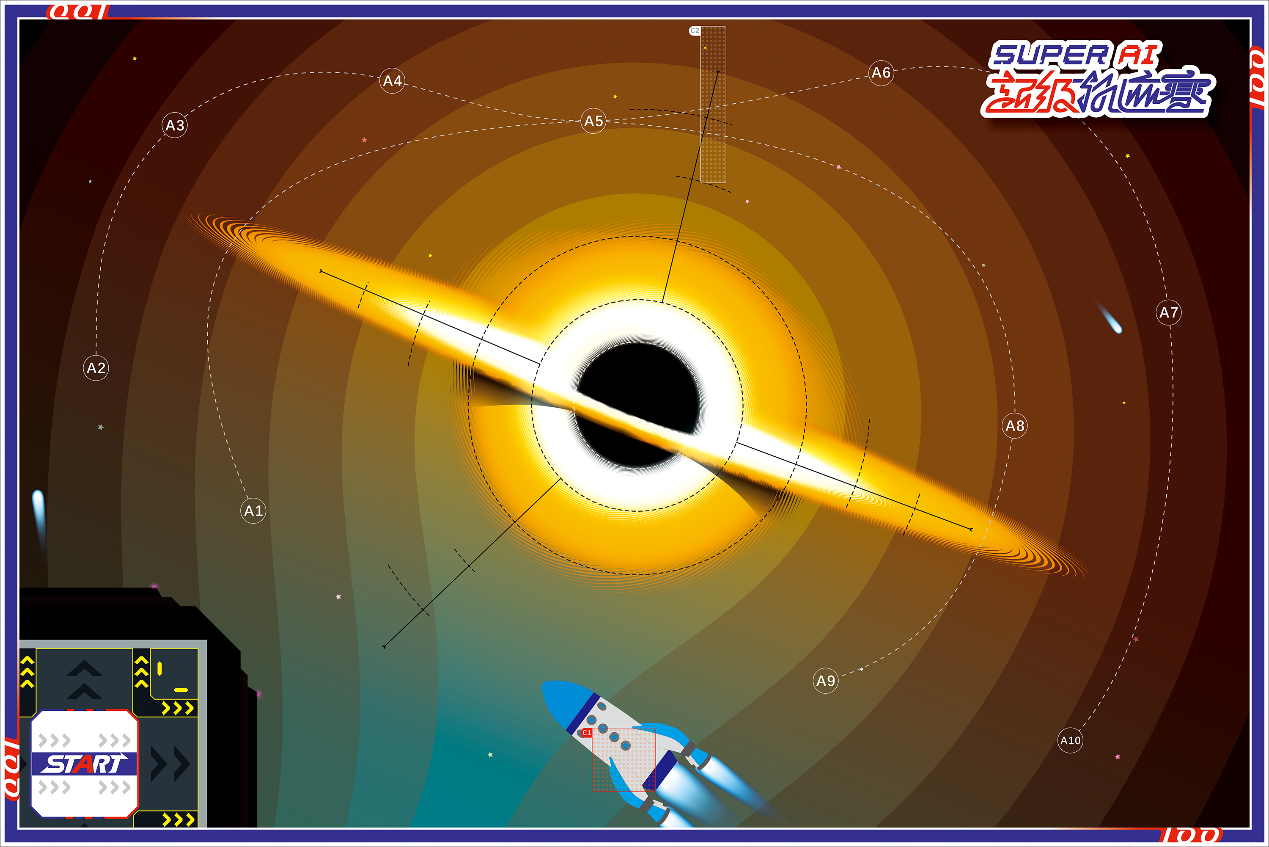
Figure: Sample Field Map of the Elementary Mission
5.1.2 Specifications of the Field
(1) The layout of the competition field for the Elementary Mission is shown in the figure above. The size of the field is 3000mm in length and 2000mm in width.
(2) There is a circular area in the center of the field that resembles a black hole. The black hole area is composed of three concentric circles with diameters of 800 mm, 500 mm, and 300 mm respectively. The areas composed of the black hole moving from the outermost to the innermost circle, are known as the apparent boundary, the event horizon, and the center of the black hole.
(3) There are multiple mission areas around the venue. Mission area C1 is fixed with the Starship Navigation task, mission area C2 is fixed with the Interstellar Scientific Research task, and the remaining areas A and B are randomly set with task models according to requirements before programming and debugging begin.
(4) There is a Starship Dock at the competition field measuring 250mm in length and 250mm in width, which is the area where the robot starts and ultimately returns. After the competition starts, the robot will depart from the Starship Dock to each mission area to complete the corresponding actions and finally return to the Starship Dock before the timer expires.
5.2 Elementary Robotics Mission
The following are the tasks that robots need to complete in the competition. Among them, "Smooth Departure" and "Starship Navigation" must be completed during the automatic period to be valid, otherwise no points will be scored.
Additional tasks may be set at the competition site and will be announced before the start of debugging. Locations of task models are set in the corresponding areas according to the requirements. If no additional tasks are set for this game, the task will not be scored.
5.2.1 Smooth Departure
(1) The robot leaves the Starship Dock.
(2) At the beginning of the game, the robot's vertical projection completely leaves the Starship Dock (each robot is only recorded once in each round), and 60 points are awarded.
5.2.2 Starship Navigation
(1) The task model consists of a legendary starship, launcher, and control center.
(2) The legendary starship model is fixed in the C1 mission area, and the launcher is set inside the starship.
(3) The robot needs to use the key to touch the launcher so the control center can start the legendary starship.
(4) If the operation sign of the control center lights up, 60 points will be scored.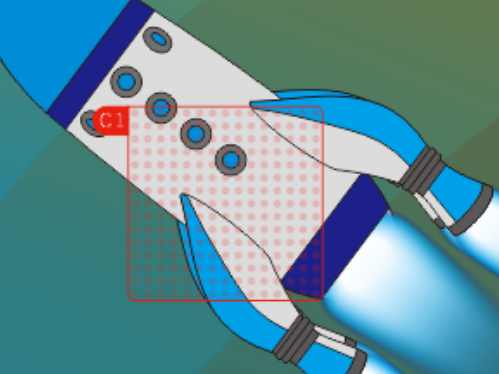
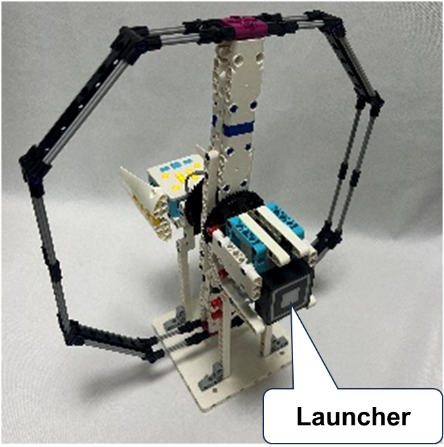
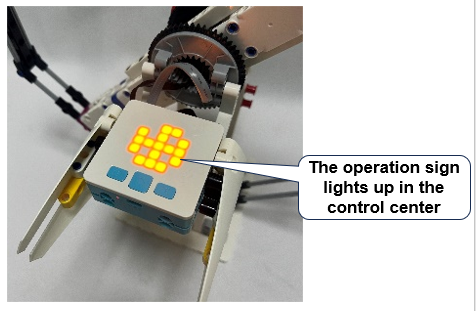
Figure: mission area C1, the initial and completed status of the Starship Navigation task
5.2.3 Space-time Distortion
(1) A space-time distortion model is randomly set up in the field.
(2) The space-time distortion model consists of a platform and two inclined slopes. The dimensions of the platform are 150mm in length, 150 mm in width, and 20mm in height. The dimensions of the slope are 150mm in length, 50mm in width, and 20mm in height.
(3) During the entire process of the robot boarding the space-time distortion model, at least one side of the driving wheel must remain in contact with the slope of the space-time distortion model and the top surface of the platform. Completion of this task will result in 60 points.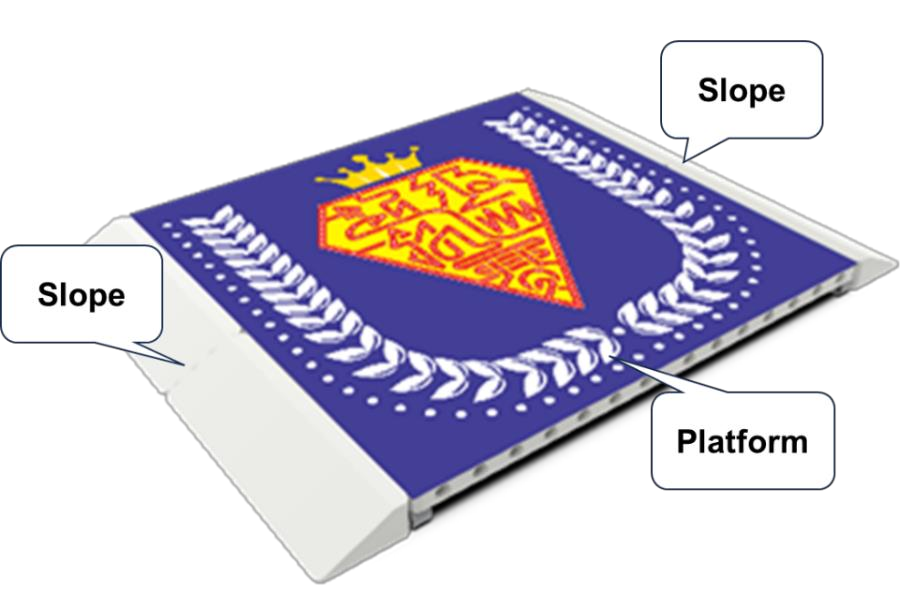
Figure: the model of the Space-time Distortion task
5.2.4 Event Horizon Exploration
(1) There is a detector model placed in each of the 10 mission areas from A1 to A10.
(2) The detector model is a dodecahedron with a length, width, and height no greater than 50 mm.
(3) The robot reaches the front of the detector and delivers it to the black hole in the center of the field. When one detector leaves the initial place, the task is considered completed and 10 points will be scored for each.
(4) If the detector touches the apparent boundaries of the black hole, 10 points will be added for each. If the detector touches the event horizon of the black hole, 20 points will be added for each. If the detector touches the center of the black hole, 30 points will be added for each. If the detector touches two areas at the same time, the area with the highest score will be counted.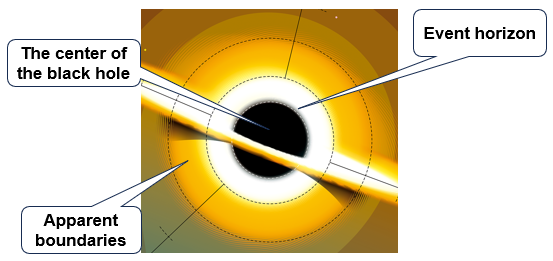
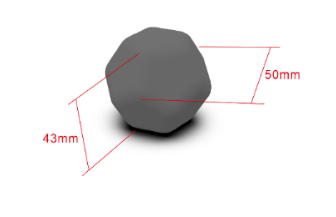
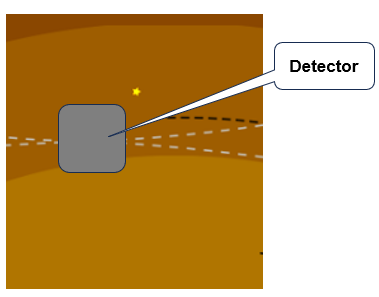
Figure: The structure of the black hole, the detector, and its placement
5.2.5 Interstellar Scientific Research (Additional Task)
(1) Before programming and debugging begin, the referee randomly draws lots to decide whether to add the Interstellar Scientific Research task to the game. If so, the task model of the Interstellar Scientific Research will be covered in mission area C2. The referee will randomly adjust the task model's orientation based on the field's situations.
(2) The model mainly comprises a lever, a scientific research device, and four constellations. The four constellations are set up on the left and right sides of the scientific research device. The four surfaces of the scientific research device are pasted with patterns of the four constellations.
(3) After the robot pushes the operating lever to make the scientific research device rotate more than one circle, the contestant needs to operate the robot to push down the corresponding constellation on the left or right side according to the constellation pattern on the side of the scientific research device facing the operating lever, so that it changes from a vertical state to a horizontal state.
(4) If the robot causes the limiter to engage, 10 points will be scored. If the corresponding constellation on the front of the scientific research device is pushed down to a horizontal state, 50 points will be added. It can be scored if only one corresponding constellation is pushed down among the four constellations. No points will be awarded if more than one or the wrong constellation is pushed down.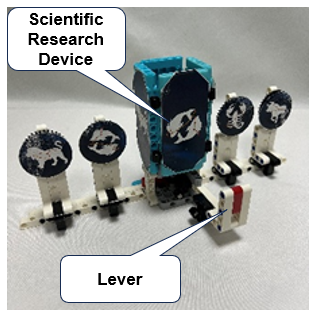
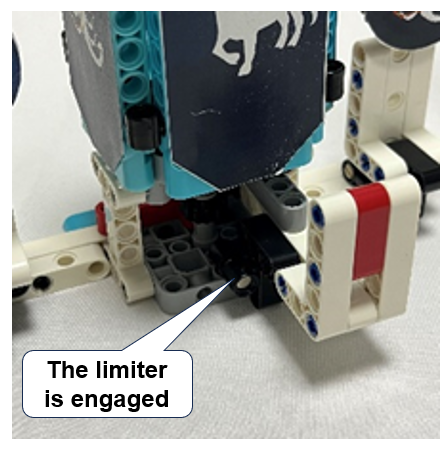
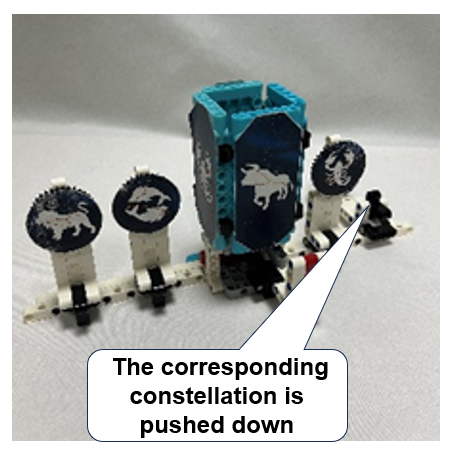
Figure: the initial, intermediate, and completed states of the Interstellar Scientific Research task
5.2.6 Safe Return
(1) The robot must return to the Starship Dock before the timer expires.
(2) The robot's drive wheels are completely projected into the Starship Dock and the "√" sign is displayed on its screen, and 60 points are awarded.
5.3 Randomness of Tasks
"Starship Navigation" is fixed in mission area C1, " Interstellar Scientific Research" is fixed in mission area C2, and the positions of the task models of "Space-time Distortion" and "Event Horizon Exploration" are not fixed. According to the specific task requirements, the referee determines the task model’s position and direction by drawing lots before programming and debugging.
Once the task model’s position and direction in the same team group are determined, they will remain consistent in all rounds.
Session 6. Descriptions of Advanced Missions
The following description of Advanced Missions only applies to the Primary School (Senior), Junior High School, and Senior High School groups.
There is an irregular track line distributed on the field. The task requires the robot to start from the Starship Dock in the specified direction under the automatic program control within the task limit of 180 seconds, move forward without deviating from the flight path, and go to each mission area as quickly as possible to complete the designated task and finally reach the finish area.
For the task models, please refer to the diagrams below the task description. Note that the actual task models in the competition may differ. For example, the beams, connector pegs, and other structures may come in different colors or vary slightly in size and height. Contestants should be capable of making adjustments based on the actual conditions.
6.1 Competition Field for the Advanced Missions
6.1.1 Competition field
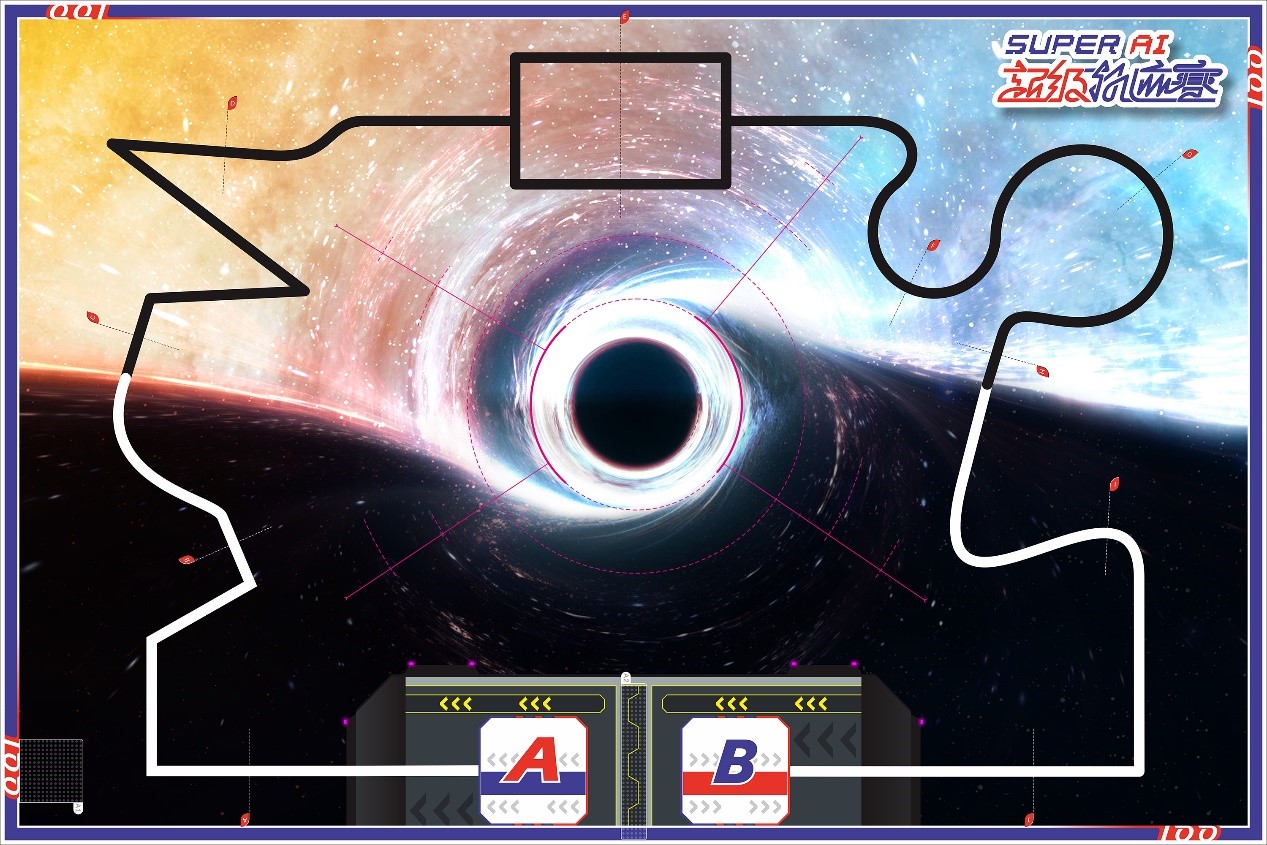
Figure: Sample Field Map of the Advanced Missions
6.1.2 Specifications of the Field
(1) The specific layout of the competition field will be subject to on-site announcement, with the maximum venue size being 3000 mm in length and 2000 mm in width.
(2) There is an irregularly distributed flight path in the field map, which is mainly composed of a track line with a width of 25 mm (±1 mm) (the track line is white and black). The flight path is the route that guides the robot's movement direction.
(3) A black hole area is in the center of the field, composed of three concentric circles with diameters of 800 mm, 500 mm, and 300 mm respectively.
(4) There are two starship docks with a length of 250 mm and a width of 250 mm in the competition venue, marked A and B respectively. They are the starting and arrival areas of the robots. After the competition starts, the robots start from Starship Dock A and travel along the flight path, eventually arriving at Starship Dock B on the other side.
6.2 Advanced Robotics Mission
Basic tasks: Smooth Departure, Flight Path, Space-time Distortion, Event Horizon Exploration, Starship Navigation, Safe Return.
Random tasks: Hatch Unfolding, Supplies Loading.
Additional tasks: Interstellar Scientific Research.
The Primary school (senior) group does not need to do random tasks. The Junior High school group draws 1 of the above random tasks to complete, and the Senior High School group needs to complete all 2 random tasks.
Additional tasks may be assigned on-site for Junior High and Senior High School groups and will be announced before debugging. The task model of the additional task will be set in the corresponding area according to the requirements.
6.2.1 Smooth Departure
(1) The robot leaves the Starship Dock.
(2) If the robot's vertical projection completely leaves the Starship Dock at the beginning (only one record per round of the competition), 60 points will be awarded.
6.2.2 Flight Path
(1) On the flight path of the entire field, there are several dotted lines perpendicular to the flight path, which divide the entire flight path into multiple sections. English letters such as "A, B, C" are marked in order.
(2) The robot must move forward in the direction of the flight path throughout the whole process. If the robot needs to perform other tasks, it can briefly deviate from its current flight path to reverse. (After completing these tasks, it must return to the point of deviation and continue on its original path.) The two driving wheels of the robot must be located on both sides of the flight path or just cover the flight path’s track line.
(3) If any driving wheel of the robot touches a marked line on the flight path, 6 points will be awarded, with a full score of 60.
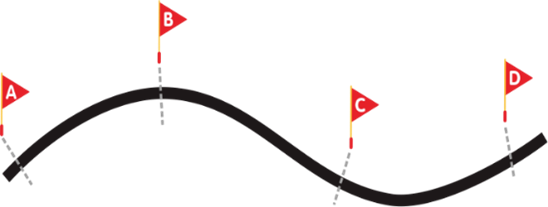
Figure: marked lines on the flight path
6.2.3 Space-time Distortion
(1) The space-time distortion model is fixed at the marked line E and is placed as shown in the figure below.
(2) The space-time distortion model consists of a platform and two transition slopes. The platform measures 150mm in length, 150mm in width, and 20mm in height. Each transition slope is 150mm long, 50mm wide, and 20mm high.
(3) If the robot enters the Space-time Distortion area from the entrance and leaves from the exit, it completes the task and gets 10 points. If the driving wheels on either side of the robot touch the top surface of the two slopes and the platform, an additional 20 points will be awarded.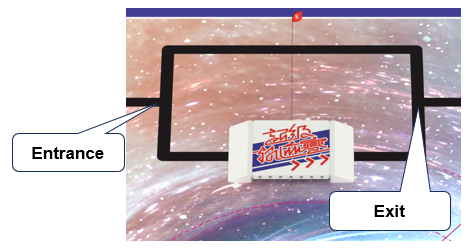
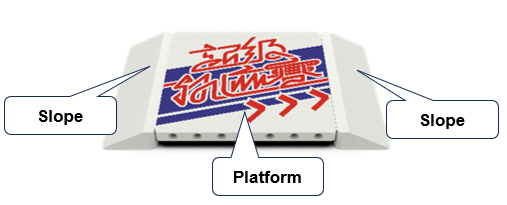
Figure: the model of the Space-time Distortion task
6.2.4 Event Horizon Exploration
(1) Detector models are randomly set up on some flight paths, with at least one set for the primary school (senior) groups and at least two sets for the junior and senior high school groups. Two soft rubber strips with a length of 410 mm, a width of 10 mm, and a height of 10 mm are set at the dividing line between the event horizon and the apparent boundaries of the black hole.
(2) The detector model is a dodecahedron with a length, width, and height not exceeding 50 mm. Before programming and debugging begin, the referee randomly draws a letter representing the marked line on the flight path. After confirmation, the referee will directly cover the detector model at the intersection of the corresponding marked line and the flight path.
(3) When the robot reaches the detector, it picks up the detector and delivers it to the black hole in the center of the field. When the detector leaves the initial placement point, the task is completed and 10 points are scored for each move.
(4) If the detector touches the apparent boundaries of the black hole, 10 points will be added for each; if the detector touches the black hole's event horizon, 20 points will be added for each; if the detector touches the center of the black hole, 30 points will be added for each touch. If the detector touches both areas at the same time, the highest score of the two will be used for extra points.
(5) During the entire process of the robot picking up and delivering the detector, the robot's vertical projection must always remain in contact with the track line and not touch the black hole area, otherwise it will be considered an invalid operation.
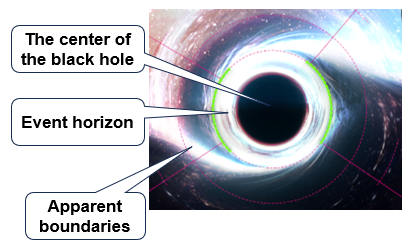
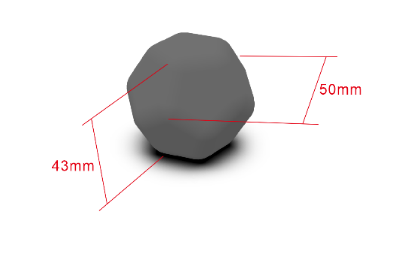
Figure: areas of the black hole, and the format of the detector
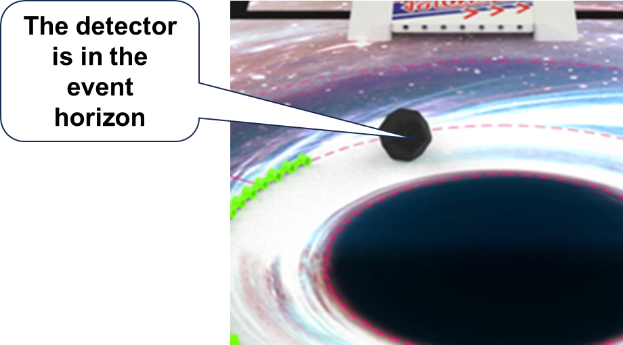
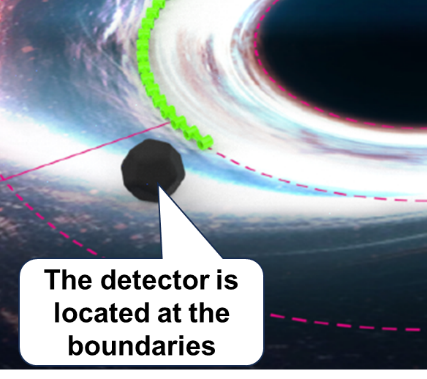
Figure: the three completed states of the Event Horizon Exploration task
6.2.5 Hatch Unfolding
(1) The Hatch Unfolding model consists of hatches, an operating lever, a spaceship, and a platform, with the spaceship placed inside the hatches.
(2) The robot needs to lift the operating lever upward to open the hatches so that the spaceship on the platform rises.
(3) The top of the spaceship is higher than the hatches and always maintains contact with the top surface of the platform, which will score 60 points.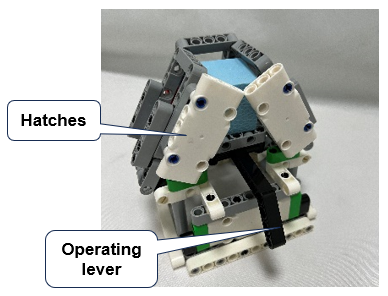
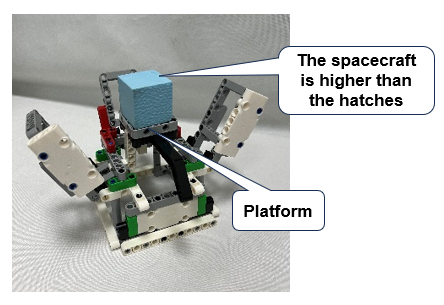
Figure: The initial and completed states of the Hatch Unfolding model
6.2.6 Supplies Loading
(1) The Supplies Loading model consists of supplies (building-block combination), a hook, an operating lever, and a base plate.
(2) The robot needs to push the operating lever forward to make the hook pick up the supplies.
(3) If the supplies are in contact with the hook but not in contact with the base plate, 60 points will be awarded.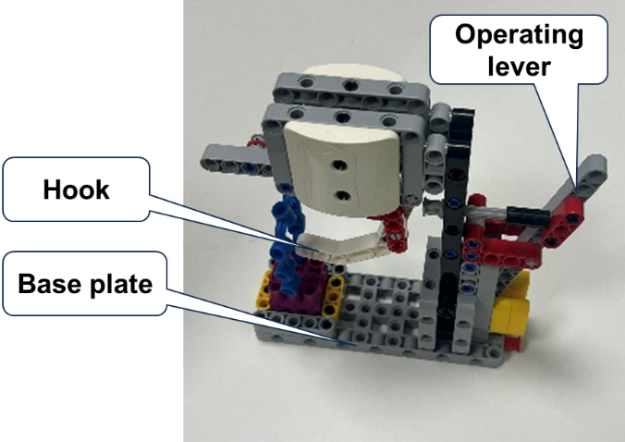
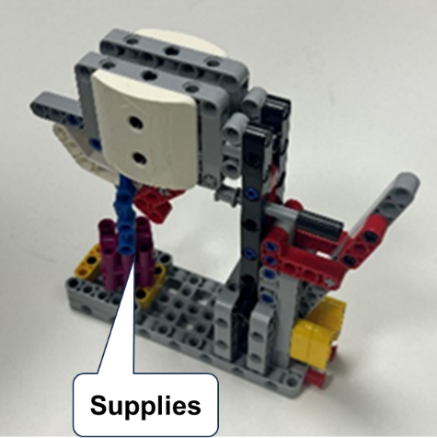
Figure: The initial and completed states of the Supplies Loading model
6.2.7 Starship Navigation
(1) The Starship Navigation model consists of a legendary starship, a launcher, and a control center. The starter always faces the adjacent track line.
(2) The legendary starship model is fixed in mission area A1, and the starter is set inside the starship.
(3) The robot needs to use the key to touch the launcher so that the control center can start the legendary starship.
(4) If the control center lights up the operation sign, 60 points are scored.
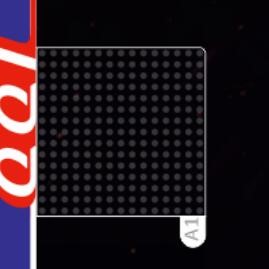
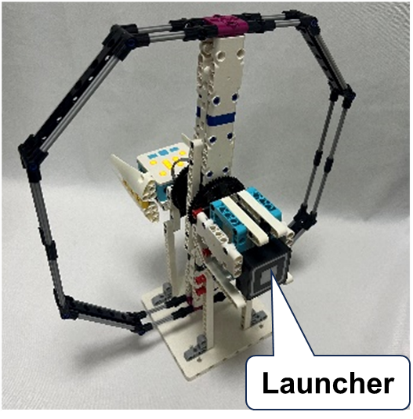
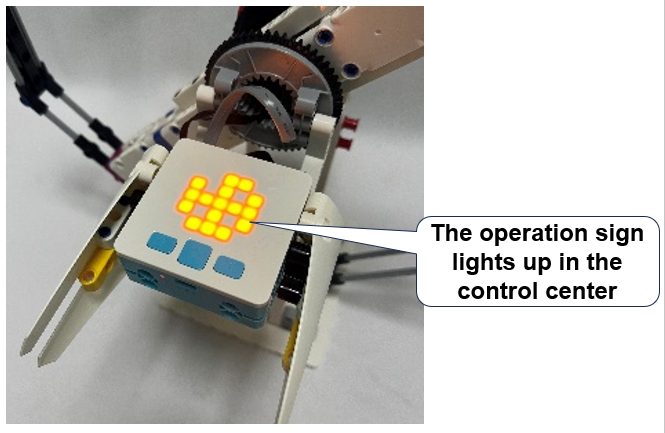
Figure: the mission area A1, the initial and completed states of the Starship Navigation model
6.2.8 Safe Return
(1) The robot moves forward in the order of the letters on the marking line without leaving the flight path and enters the finish area (i.e., Starship Dock B).
(2) If the vertical reflection of the robot's driving wheels is included in the finish area, 60 points will be scored.
6.2.9 Interstellar Scientific Research (Additional Task)
(1) The Interstellar Scientific Research Mission model is fixed in Mission Area A2 next to the finish area. The robot can only perform this task after completing the "Safe Return" task. This task will not be timed, and its completion or failure does not affect the time score.
(2) The model mainly comprises an operating lever, a scientific research device, and four constellations. The four constellations are respectively set up on the left and right sides of the identifier. The four surfaces of the scientific research device are pasted with patterns of the four constellations.
(3) After the robot pushes the operating lever to rotate the scientific research device for more than one circle, it identifies the constellation pattern on the side of the scientific research device facing the robot, and pushes down a corresponding constellation on the left or right side based on the image recognition, so that it changes from a vertical state to a horizontal state.
(4) If the robot causes the limiter to close, 10 points will be scored. If the corresponding constellation on the front of the scientific research device is pushed down to a horizontal state, an additional 50 points will be awarded. Among the four constellations, only one corresponding constellation can be pushed down. If more than one constellation is pushed down, no points will be scored.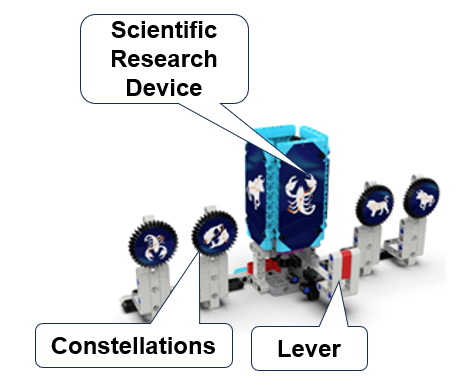
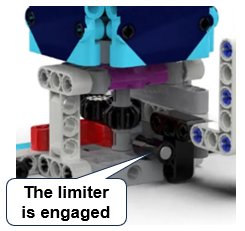
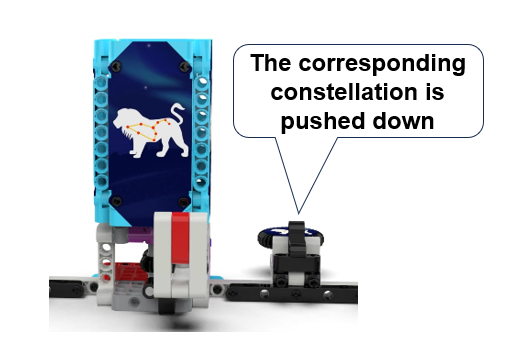
Figure: the initial, intermediate, and completed states of the Interstellar Scientific Research task
6.3 Randomness of Tasks
Except for "Starship Navigation" which is fixed in mission area A1, the additional task "Interstellar Scientific Research" is fixed in mission area A2, "Space-Time Distortion" is fixed at marked line E, and the locations of the task models of "Event Horizon Exploration", "Hatch Unfolding" and "Supplies Loading" are not fixed. Before programming and debugging start, the referee determines the location and direction of the task models by drawing lots, according to the task requirements.
6.4 Time Limit
The duration of a single round is 180 seconds.
6.5 Off the Track Line
During the movement, the robot is not allowed to deviate from the track line of the flight path (that is, the robot's driving wheels must touch or be on both sides of the black line, and must pass through all track lines along the way). If the robot completely deviates from the black line, it must be reset.
For completing tasks other than the "Event Horizon Exploration" task, the robot can temporarily deviate from the track line but must return to the original deviated location before continuing to drive.
7.1 Each team is allowed to "false start" the robot once in each round of the mission. If the second "false start" occurs in the group stage, the score for that round will be 0 points, and in the finals, the team will be eliminated directly.
7.2 After the start of the game, if a contestant touches objects or robots on the field without the referee's permission, they will be warned for the first time, and their score for the second time will be 0 points.
7.3 If the coach or parents give verbal instructions that affect the contestants' performance, personally participate in the building and debugging, or touch or repair the works, the score for that round will be recorded as zero once verified.
7.4 After starting, the robot shall not deliberately separate parts or drop parts on the field for strategic needs. If the robot does this, it will be considered as a foul and a warning will be given as determined by the referee. If the violation occurs again, the score for this round will be 0 points. Parts that are separated or dropped due to foul play will be cleared immediately by the referee.
7.5 If a contestant fails to follow the referee's instructions, the referee will assess the severity of the situation and take appropriate action. The contestant may receive a warning, a score of 0 in the preliminary round, elimination from the final, or even disqualification from the event.
Appendix 1.
Score Sheet for the Interstellar Legend (Elementary Mission)
Team:_______________ Group:_________________
|
Fixed tasks |
||||
|
Tasks |
Points |
Round 1 |
Round 2 |
|
|
Automatic Period (10 seconds) |
Smooth Departure |
The robot leaves the Starship Dock, and 60 points will be scored. |
||
|
Starship Navigation |
If the operation sign of the control center lights up, 60 points will be scored. |
|||
|
Remote-control Period (110 seconds) |
Space-time Distortion |
If at least one of the robot's driving wheels passes, 60 points will be scored. |
||
|
Event Horizon Exploration (The highest scoring position is calculated, and a single detector can receive up to 40 points) |
When one detector leaves the initial placement, 10 points will be scored. |
|||
|
If the detector touches the apparent boundaries of the black hole, 10 points will be added for each. |
||||
|
If the detector touches the event horizon of the black hole, 20 points will be added for each. |
||||
|
If the detector touches the center of the black hole, 30 points will be added for each. |
||||
|
Interstellar Scientific Research (Additional task) |
If the limiter is engaged, 10 points will be scored. |
|||
|
If the corresponding constellation is pushed down to a horizontal state, 50 points will be added. |
||||
|
Safe Return |
The robot's driving wheels are fully integrated into the starship dock and display "√", 60 points will be scored. |
|||
|
Total Score for All Tasks |
||||
|
Fluency Score |
The initial fluency score is 50 points, and 5 points will be deducted for each reset. |
|||
|
The Score for Completed Tasks (≤120 seconds, recorded to one decimal place, eg.110.1s) |
||||
|
Time Score (refer to the requirements of "4.5 Time score" about the remaining time range) |
||||
|
Total Score in A Single Round (= score for completed tasks + fluency score + time score) |
||||
|
Total Score of All Rounds |
||||
Referee:________________ Contestant:_______________________
Appendix 2
Score Sheet for the Interstellar Legend (Advanced Mission)
Team:_______________ Group:_________________
|
Fixed tasks |
||||
|
Tasks |
Points |
Round 1 |
Round 2 |
|
|
Basic tasks |
Smooth Departure |
The robot leaves the Starship Dock A, scoring 60 points. |
||
|
Flight Path |
For each line where the drive wheel touches the markings, scoring 6 points. |
|||
|
Space-time Distortion |
The robot enters the area from the entrance and leaves from the exit, scoring 10 points. |
|||
|
The robot's driving wheels contact the top surface of the slope and platform, scoring 20 points. |
||||
|
Event Horizon Exploration (The highest scoring position is calculated, and a single detector can obtain up to 40 points.) |
When one detector leaves the initial placement, 10 points will be scored for each. |
|||
|
If the detector touches the apparent boundaries of the black hole, 10 points will be added for each. |
||||
|
If the detector touches the event horizon of the black hole, 20 points will be added for each. |
||||
|
If the detector touches the center of the black hole, 30 points will be added for each. |
||||
|
Starship Navigation |
If the operation sign of the control center lights up, 60 points will be scored. |
|||
|
Safe Return |
The vertical reflection of the robot's driving wheels in the Starship Dock B and display "√", scoring 60 points. |
|||
|
Random tasks |
Hatch Unfolding |
If the top of the spacecraft is higher than the hatch and in contact with the platform, score 60 points. |
||
|
Supplies Loading |
If the supplies are in contact with the hook but not in contact with the base plate, score 60 points. |
|||
|
Additional task |
Interstellar Scientific Research |
If the limiter is engaged, 10 points will be scored. |
||
|
If the only correct constellation is pushed down to a horizontal state, 50 points will be added. |
||||
|
Total Score for All Tasks |
||||
|
Fluency Score |
The initial fluency score is 50 points, and 5 points will be deducted for each reset. |
|||
|
The Score for Completed Tasks (≤120 seconds, recorded to one decimal place, eg.110.1s) |
||||
|
Time Score (refer to the requirements of "4.5 Time score" about the remaining time range) |
||||
|
Total Score in A Single Round (= the score for completed tasks + fluency score + time score) |
||||
|
Total Score of All Rounds |
||||
Referee:________________ Contestant:_______________________
Passing states of flight path markers
|
Round |
1 |
2 |
3 |
4 |
5 |
6 |
7 |
8 |
9 |
10 |
|
1st |
||||||||||
|
2nd |
| Type of motor | Maximum |
| Continuous Revolution Motors | 4 |
| Servo motor | 2 |
| Encoder motor | 2 |
| Stepping motor | 2 |
| Sensor type | Maximum |
| IR sensors | 4 |
| Ultra-sonic sensors | 2 |
| Touch sensors | 2 |
| Color sensors | 1 |





or please give us a call!

Universitatea din Oradea